

The joint event was held on Friday 5 December 2025 with City St George’s, University of London, the University of Essex, and Queen Mary University of London (QMUL). It took place at City St George’s campus in Clerkenwell and was attended by over 100 people, including carers and others with lived experiences of mental health conditions.
After an introduction from Professor Fabian Freyenhagen (School of Philosophical, Historical, and Interdisciplinary Studies, University of Essex), Professor Frank Röhricht (Director of Research and Innovation, ELFT) and Professor Rose McCabe (School of Health and Medical Sciences, City St George’s, University of London), Frank introduced a session on the impact of significant incidents on mental health policy and practice.
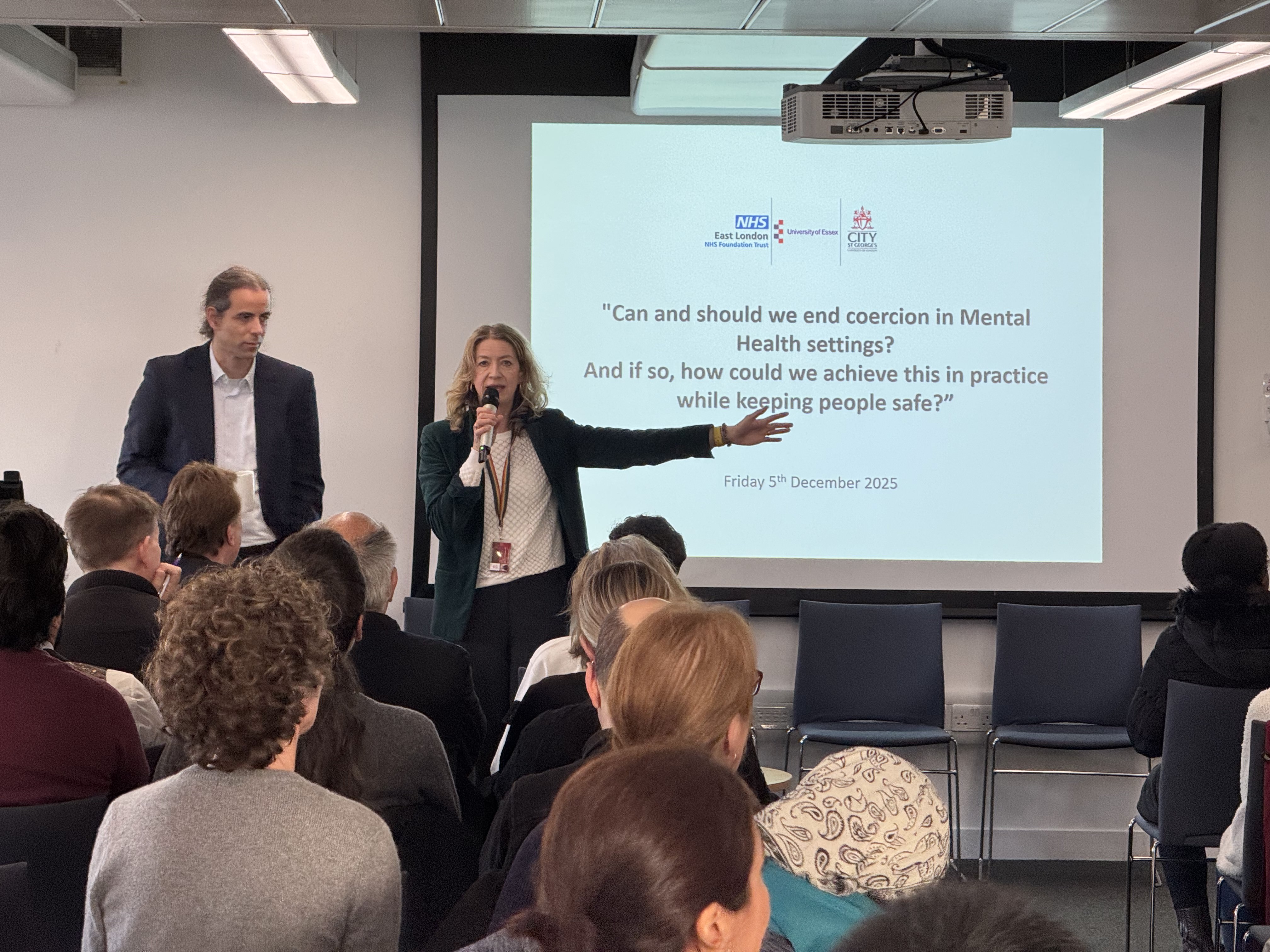
As there is no clear evidence that coercion has either therapeutic or safety benefits at population level, but good evidence that using coercive measures is counterproductive in the long-run, Frank expressed his personal view that coercion can be legitimate only to prevent imminent serious risk of harm in individual instances, but not for treatment or prevention at population level.
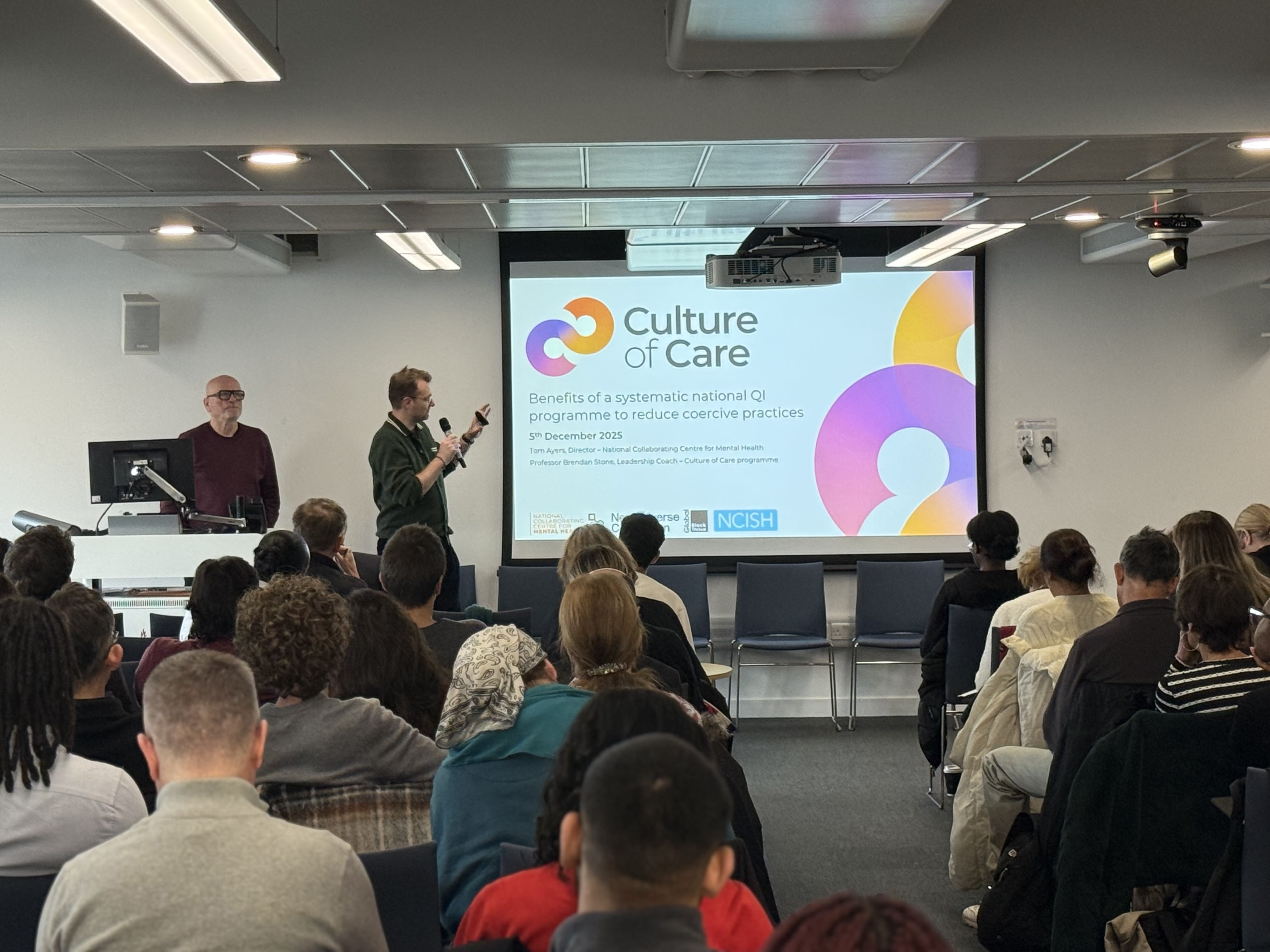
Director of the National Collaborating Centre for Mental Health, Tom Ayers and Professor Brendan Stone of the University of Sheffield spoke about the benefits of quality improvement programmes to reduce coercive practices. Afterwards, Fabian discussed the ethical challenges with ending coercion. He made the case that psychiatry should ask to be relieved of its coercive powers, and request society to find a more human rights-compliant way to support people in distress to prevent harm. This would allow psychiatry to concentrate on care only.
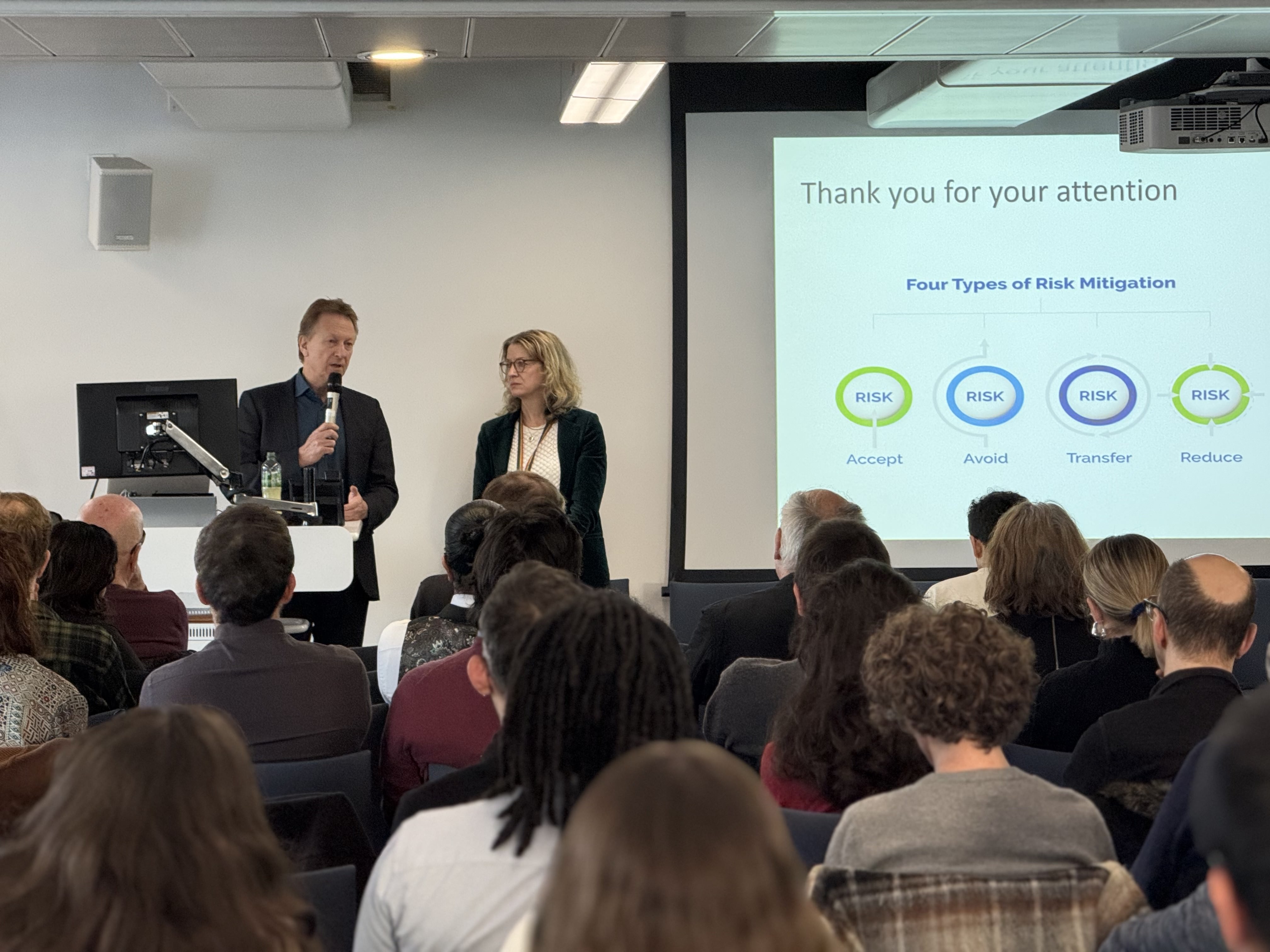
After a short coffee break, three lived-experience experts – Sidney Millin, Irum Rela and Brendan Stone – presented a powerful reminder of the harms and wrongs of coercion. After lunch, Dr Mary Lavelle (School of Psychology, Queen’s University Belfast) and Rose presented the Communication and Restrain Reduction project. This is a research project identifying communication techniques that are effective in communicating with people on wards to avoid restraint, seclusion and forced tranquilisation.
Professor Victoria Bird (School of Health and Social Care, University of Essex; and Queen Mary University of London) opened a discussion about what we already know from research about prevention of coercion. She also highlighted the use of theatre and its ability to make us better understand the perspectives of those on the receiving end of coercion, and the importance of their voices being heard.
The day ended with an update from Tim Kendall (National Clinical Director for Mental Health at NHS England) about community mental health care pilot schemes, before Malik Gul (Director, Wandsworth Community Empowerment Network; Convenor, Ethnicity and Mental Health Improvement Project; Co-Chair, NHS London Mental Health and Urgent and Emergency Care Black, Asian, and Minority Ethnic Advisory Group) raised important questions about how meaningful change can be achieved in the face of structural racism, and its persistent effects on disproportionate rates of coercion among racialised groups. Finally, participants and speakers reflected together on the day and discussed how effective change could be achieved.