
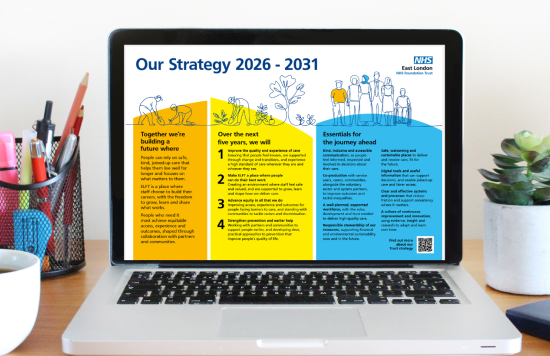
The strategy has been shaped through the Trust's "Big Conversation", which engaged more than 1,700 staff, service users, carers, governors, members and partners over the past year. The feedback received has informed a strategy focused on what matters most to the people and communities ELFT serves.
Chief Executive Officer Lorraine Sunduza OBE said:
"This strategy has been developed with and for the people we serve. Through our conversations with service users, carers, colleagues and partners, we heard a clear message about the need for care that is more joined up, more equitable and more focused on what matters to individuals and communities. Our strategy sets out how we will work together over the next five years to improve experiences of care, support people earlier, reduce inequalities and create better outcomes for local people."
Chair Eileen Taylor said:
"I am proud that this strategy has been shaped by such extensive engagement with the people and communities we serve. It reflects our shared values and ambitions, while recognising the challenges ahead. Its success will depend on continued partnership with service users, carers, colleagues and community organisations, and I look forward to seeing the positive difference it makes over the coming years."
Serving around 1.8 million people across Bedfordshire, Luton and East London, ELFT provides community health, mental health and primary care services. The new strategy sets out a shared ambition to build a future where people can rely on safe, kind and joined-up care that helps them live well for longer and focuses on what matters most to them.
Over the next five years, the Trust will focus on four strategic priorities: improving the quality and experience of care; making ELFT a place where people can do their best work; advancing equity in all that it does; and strengthening prevention and earlier help.
The strategy responds to the challenges facing health and care services, including growing demand, health inequalities and the need for care to be more connected and sustainable. It also builds on ELFT's strengths, including its commitment to quality improvement, people participation, inclusion and clinical leadership.
The strategy will now guide the Trust's work over the next five years, supported by local delivery plans developed in partnership with colleagues, service users, carers and system partners.